

join the waitlist
Saddy at the railing by the water, looking into the camera

be seen

A 12-week somatic group journey with Saddy

Feel more like yourself around other people.

You might want to speak more openly with your partner, feel less pressure to impress when dating, or finally share the ideas you keep holding back at work or online.

BE SEEN is a space to understand what gets in the way and practise expressing yourself with more honesty, choice, and self-trust.

For women who are single, dating, or in a relationship - and anyone within that who wants to feel more comfortable being visible in their life.

Receive the dates, investment, and enrolment details when they’re available.

You say “I’m fine” when you wish someone would notice you need support.

You agree to something, then feel frustrated with yourself because you wanted to say no.

You spend a date wondering whether they like you and only later ask yourself whether you liked them.

You want your partner to understand what you need, but asking feels uncomfortable - or you’re unsure what you need in the first place.

You have something to contribute in a meeting, then talk yourself out of saying it.

You write a post, rewrite it, and leave it in your drafts because you’re worried about what people will think.

You’re often the listener, the helper, or the capable one. There are parts of you that people rarely get to meet.

BE SEEN offers space to explore these experiences and practise having more choice in how you respond.

Do you recognise yourself here?

What would you like to do differently?

  • Perhaps you’d like to ask for help before you’re overwhelmed.
  • Tell someone that something hurt without immediately apologising for bringing it up.
  • Express a preference on a date, even when you don’t know whether the other person will agree.
  • Share your opinion without needing to explain it perfectly.
  • Receive a compliment or an offer of care without brushing it away.
  • Recognise when a relationship makes room for you - and when you’re doing most of the accommodating.

These are the everyday situations we’ll bring into the work.

Saddy from behind, one hand on the railing, looking out over the water

Why can something so simple feel so difficult?

You may know what you want to do and still notice yourself holding back when the moment comes.

Your chest tightens. Your mind goes blank. You start explaining, smoothing things over, or deciding it’s easier to handle everything yourself.

We’ll explore how earlier experiences, familiar roles, and present circumstances may shape those responses. Perhaps being helpful brought you connection. Perhaps disagreement was difficult, or needing support didn’t feel welcome.

You get to discover what fits your experience. Together, we’ll explore what these patterns have helped you navigate and where you would now like more freedom.

How we’ll work on this together

Each week combines a focused teaching, guided practice, and opportunities to explore how you relate with others.

We’ll work with ordinary situations that matter to you, at a pace that feels manageable.

01

Understand what happens for you

You’ll learn to notice the thoughts, feelings, bodily sensations, and impulses that show up in a familiar situation.

For example: someone asks you for a favour, your stomach tightens, and you hear yourself saying yes before you’ve considered whether you have the capacity.

02

Get to know the response

Through parts work, we’ll explore the different sides of you involved.

There may be a part that wants to help, a part that worries about disappointing someone, and another that feels exhausted. We’ll make room to understand each of them.

03

Practise another possibility

You might experiment with saying, “Let me get back to you,” expressing a preference, or asking for something specific.

We’ll notice what happens in your body as you try it and explore what support makes the experience more manageable.

04

Bring it into your life

Between sessions, you’ll choose a small, practical experiment: asking your partner for help, speaking once in a meeting, sharing an idea with a trusted person, or pausing before agreeing.

You’ll have space to reflect on what happened, including what felt difficult and what you learnt.

how we’ll work on this together

Saddy leaning back by the water, eyes closed, her hands in her hair

What does “somatic” mean here?

It means we include your bodily experience in the conversation.

Alongside talking, we may notice tension, changes in breathing, the urge to pull away, or what happens when someone gives you their attention. Practices can include gentle movement, grounding, and noticing the support around you.

You can keep your eyes open, ask questions, take a pause, and choose how much you share.

Why a group?

A group gives you opportunities to practise relating while support is available.

You can try expressing a preference and have it heard. Ask someone to clarify what they meant. Say, “That doesn’t quite fit for me.” Notice what it is like to receive attention without having to entertain, reassure, or help anyone.

You may recognise something of yourself in another person’s experience, too.

Your boundaries remain part of the work. Sharing is by choice, and observing is a valid way to participate.

Saddy by the water, her arms raised and her face to the sky

Weeks 1–3

Understand your patterns

Notice how you respond around other people, explore the roles you tend to take, and begin getting to know the parts that work hard to protect you.

Weeks 4–6

Get clearer about yourself

Explore feelings, needs, preferences, and qualities you’ve learnt to hold back. This can include anger, tenderness, ambition, playfulness, and the wish to be recognised.

Weeks 7–9

Practise asking, receiving, and setting limits

Experiment with clearer requests, boundaries, differences of opinion, and repairing misunderstandings. Notice both your own responses and whether another person is willing to meet you.

Weeks 10–12

Apply it where it matters

Bring the work into dating, partnership, friendship, work, or online expression. Reflect on what has changed and build a practical plan for continuing.

what we’ll explore over 12 weeks

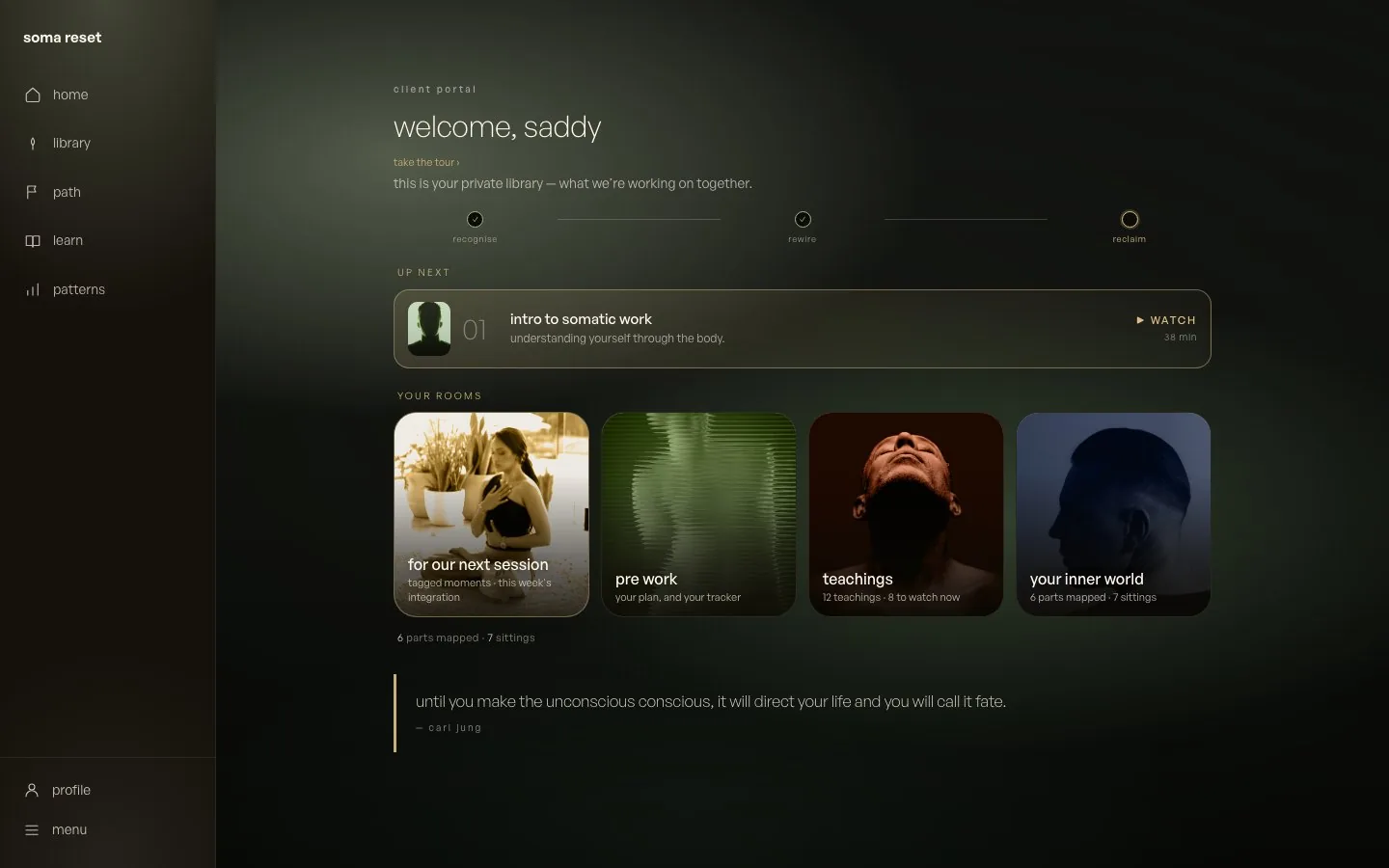
the client portal
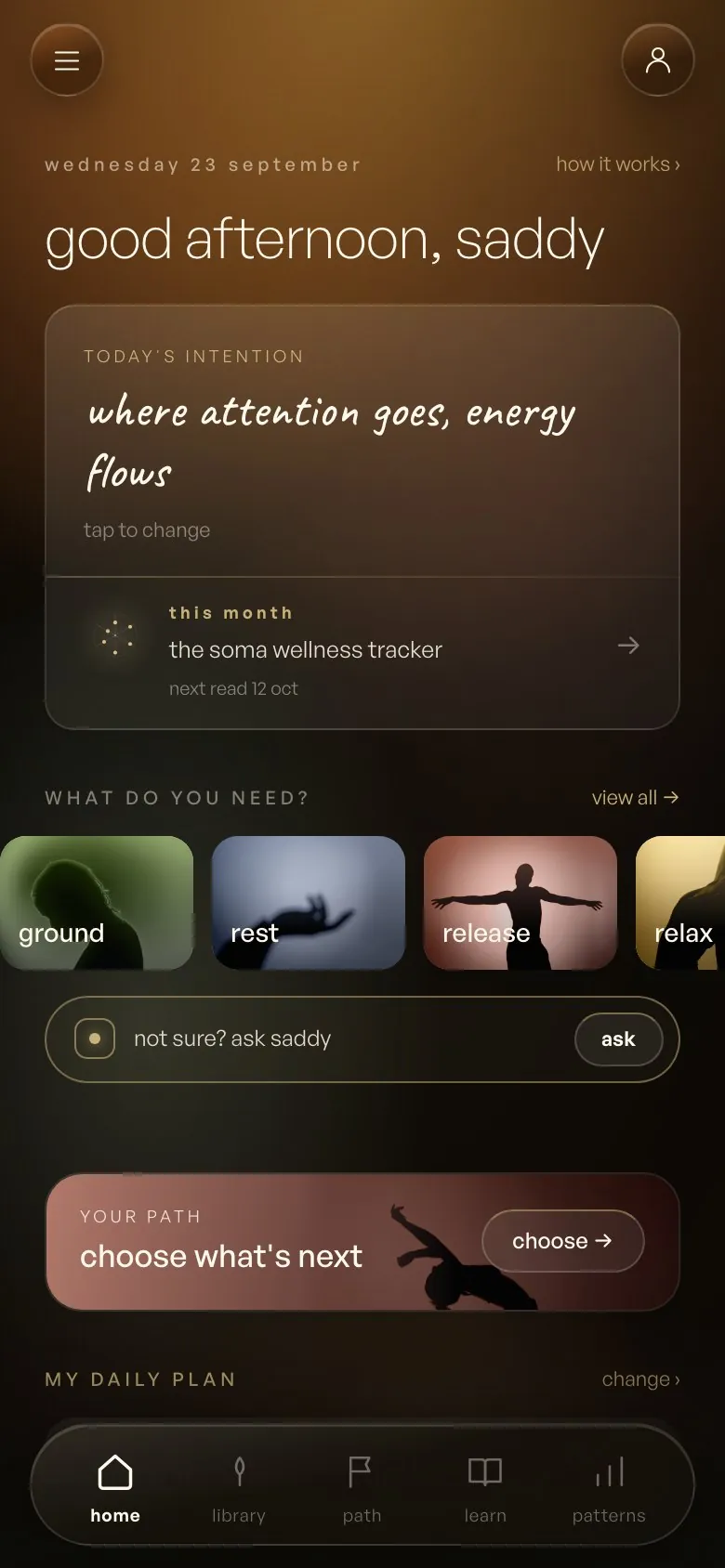
the soma reset app

+ soma reset

+ client portal

Who BE SEEN is for

BE SEEN may be a good fit if you:

  • Are single and want to understand your relationship patterns, build meaningful connections, or feel clearer about what you want.
  • Are dating and want more room to be yourself, express preferences, and notice compatibility.
  • Are partnered and want to communicate more honestly, ask for support, and stay connected to your own needs.
  • Want to speak up, share your work, or become more visible at work or online.
  • Often put other people first and would like to recognise your own feelings and preferences sooner.
  • Are interested in learning through both reflection and gentle practice with others.

You don’t need previous experience with somatic work or parts work. You also don’t need to be outgoing or comfortable sharing in a group already.

When another kind of support may fit better

BE SEEN may not be the right fit if:

  • You want couples therapy involving both you and your partner. This group focuses on your own experience and choices in relationship.
  • You’re looking for social media strategy, business mentoring, or public-speaking training. We’ll explore the personal experience of visibility.
  • You need fully individualised therapeutic support, or you would currently feel more supported working privately.

You’re welcome to ask about the format before deciding whether to join.

Saddy walking along the jetty towards the camera, smiling, one hand in her hair

meet Saddy

I’m Saddy, a somatic practitioner and nervous system educator.

I work with people who want to understand themselves more deeply and have more choice in the patterns that keep showing up in their lives.

My approach brings together somatic work, parts work, shadow inquiry, and relational practice. We explore what you feel, what you’ve learnt to hold back, and what happens when you begin expressing yourself more honestly.

My own lived experience has shaped how much I value being listened to, having choice, and being able to move at your own pace. Those values are central to how I hold this space.

What would you like someone to know about you?

Perhaps there’s a need you’ve struggled to express, an idea you want to share, or a side of yourself you’d like to bring into your relationships.

BE SEEN is an invitation to begin exploring that - with support and opportunities to practise.

Join the waitlist to receive the dates, investment, and enrolment details when the next group opens.

more details coming soon

Registering your interest doesn’t commit you to joining.